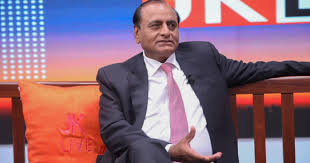
Kenyan industrialist Narendra Raval has inaugurated a Ush2 trillion ($550 million) steel plant in Tororo, Uganda, expanding Devki Group’s footprint beyond Kenya and reinforcing the company’s role in East Africa’s manufacturing sector.
The investment, among the region’s largest private industrial projects in recent years, was launched at a high-profile ceremony attended by President Yoweri Museveni, President William Ruto, and President Paul Kagame.
Devki Group, which began as a small steel shop in Nairobi in 1986, reflects a trajectory common among early Indian immigrants to East Africa, who built successful industrial and commercial enterprises across the region.
Over the decades, Devki has grown into a diversified industrial conglomerate, with subsidiaries including Devki Steel Mills, National Cement, Simba Cement, Maisha Mabati Mills, National Cement Uganda, Maisha Minerals and Fertilizers, Maisha Packaging, Northwood Aviation Agencies, and Cemtech.
With 19 factories across 9 industries and a workforce of more than 14,000 employees, Devki is the largest private-sector employer in Kenya.
At the inauguration Raval said the Tororo plant will have wide-reaching impact. “Beyond jobs, this factory will support the region’s push for stronger manufacturing and infrastructure,”
The Tororo steel plant, situated on more than 400 acres, is expected to reduce Uganda’s dependence on imported steel while strengthening regional trade networks. Currently, the facility employs over 400 workers and is projected to expand to 20,000 employees by 2027 across Devki Group’s East African operations.
In addition to generating 15,000 direct jobs, the plant is anticipated to support thousands of positions in transport, logistics, and mining, highlighting the broader employment impact of industrial investment.
Output from the plant is expected to surpass Uganda’s domestic requirements, with steel destined for Kenya, Tanzania, Rwanda, South Sudan, and the Democratic Republic of Congo, reinforcing industrial supply chains across East Africa.
Uganda’s mineral wealth and investor-friendly policies were central to Devki’s decision. The country holds an estimated 500 million tonnes of iron ore, and a ban on raw ore exports ensures that value addition occurs locally. “These are the key reasons we committed to setting up this factory here,” Raval said.
When completed in December 2027, the plant is expected to produce one million tonnes of steel annually, positioning Uganda among Eastern and Central Africa’s leading steel producers. Raval welcomed government assurances that steel imports would be restricted once domestic output rises. “Uganda will be on the global map as a primary steel producer,” he said.
Source: Africabusinessinsider