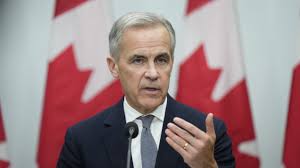
Prime Minister Mark Carney’s government announced plans to enable $1 trillion in investments to drive productivity and boost the Canadian economy to enhance partnerships at home through a new industrial strategy.
Finance Minister François-Philippe Champagne introduced Budget 2025: Canada Strong on Tuesday. It includes several tax changes aimed at encouraging investment in manufacturing, clean energy and research and development as the government aims to spend less on operations and invest more in workers, businesses and nation-building infrastructure to grow a domestic economy.
Ottawa plans to attract companies to invest and innovate in Canada through investment tax credits such as the Productivity Super-Deduction, and improvements to the Scientific Research and Experimental Development tax incentive.
The government states tax incentives and planned spending of over five years (about $280 billion cash basis) in support of third parties will enable more than $1 trillion in investments – $315 billion in infrastructure, $210 billion in supports for private research and development, $130 billion in housing, $270 billion in industrial development programs, $60 billion in accelerated depreciation and immediate expensing measures and $95 billion other tax incentives to open the doors for further investments.
“The government is acting decisively by improving regulatory efficiency, increasing competition, boosting tax incentives for new investments, and promoting generational investments in housing and infrastructure,” Budget 2025 reads.
Ottawa plans to attract investment to unlock AI data centres for the “next generation of infrastructure,” supercharge housing construction and further develop a defence industry.
The government says “generational investments” will create demand for domestic production while supporting growth for strategic sectors and empower Canada to capitalize on its natural advantages.
The government states the rules-based international order and trading system has hurt companies, displaced workers and caused major disruption and upheaval for Canadians, prompting them to spearhead a nation-wide initiative, according to a news release accompanying the budget document.
“To drive productivity, boost the capacity of Canada’s economy and to secure a prosperous future for Canadians, Canada needs a sea change to reverse Canada’s weak private sector investment,” Budget 2025 reads. ”The government is acting decisively by improving regulatory efficiency, increasing competition, boosting tax incentives for new investments and promoting generational investments in housing and infrastructure,”
The government plans to build on it’s Major Projects Office by providing $213.8 million over five years, starting in the 2025 to 2026 fiscal year, according to the Budget.
Ottawa previously announced the first five projects referred to the MPO that it said collectively represent $60 billion in total capital investment. In the budget, it said further national building projects, taken together, are expected to trigger at least $150 billion in total capital investment.
Source: Bnnbloomberg