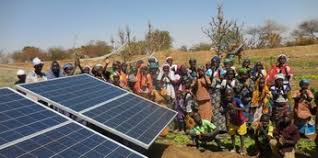
The funding will go toward building and operating an 18 MWp solar power plant in Dédougou, marking a key step in the government’s drive to expand renewable energy in Africa and cut dependence on costly, carbon-intensive power sources.
The project is backed by €11.2 million in debt from the Dutch development bank FMO through its Building Prospects Fund and a €6 million concessional package from the African Development Bank’s Sustainable Energy Fund for Africa (SEFA), comprising a €2.5 million senior concessional loan and a €3.5 million reimbursable grant.
According to a 2023 World Bank report, Burkina Faso ranked as the seventh African nation with the lowest electricity access rate, with only 21.7% of its population connected to power. Countries with even lower access include South Sudan (5.4%), Burundi (11.6%), Chad (12.0%), Malawi (15.6%), the Central African Republic (17.6%), and Niger (20.1%).
The new solar facility is poised to play a pivotal role in transforming Burkina Faso’s energy landscape, delivering a meaningful increase in domestic power generation while reinforcing the stability of the national grid.
By providing a cleaner and more affordable alternative, it will ease the country’s heavy reliance on thermal plants and electricity imports.
As recently as a few years ago, imports which came primarily from Côte d’Ivoire and Ghana, accounted for close to 40% of Burkina Faso’s total supply.
This dependence has long undermined the nation’s development prospects, constraining industrial capacity and leaving its growing population vulnerable to external supply disruptions.
The facility will operate under a 25-year power purchase agreement with the state utility SONABEL and forms part of the Desert-to-Power initiative, which aims to deliver 10 GW of solar capacity across the Sahel by 2030.
Source: Africabusinessinsider