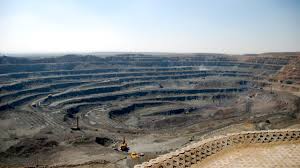
As Beijing further weaponizes its control over the flow of minerals that Western countries need for their green, defense and digital ambitions, Europe has to face an uncomfortable truth: It won’t escape China’s dominance anytime soon.
The Chinese government’s shock imposition earlier in October of sweeping export controls on rare-earth magnets and the raw materials needed to make them has escalated a running trade feud with the United States. The embargo threatens vast — and rapid — collateral damage on the European Union and has forced its way onto the agenda of a high-level summit on Thursday.
“A crisis in the supply of critical raw materials is no longer a distant risk. It is on our doorstep,” European Commission President Ursula von der Leyen said in a pre-summit speech to European lawmakers.
“Now, we must accelerate decisively and urgently. We need faster, more reliable supply of critical raw materials, both here in Europe and with trusted partners. I will be ready to propose further measures to ensure Europe’s economic security and I will accelerate what we have already put in motion.”
Beijing’s announcement this month drew a fierce rebuke from U.S. President Donald Trump, who threatened to hike tariffs on Chinese goods to 100 percent. Trump is due to hold a high-stakes meeting with Chinese President Xi Jinping on the sidelines of an Asia-Pacific summit at the end of October.
The EU, which imports nearly all of its rare earths and permanent magnets from the Middle Kingdom, is caught in the crossfire.
“We have no interest in escalation,” Maroš Šefčovič, the EU’s trade chief, told reporters Tuesday. “However, this situation casts a shadow over our relationship. Therefore, a prompt resolution is essential.”
China and the EU will “intensify contacts at all levels” on the issue, Šefčovič added. Wang Wentao, the Chinese trade minister, has accepted an invitation to come to Brussels in the coming days to discuss the restrictions, Šefčovič said after a two-hour call between the two.
The EU is also consulting with the G7 group of industrialized nations on a coordinated response on critical minerals ahead of an Oct. 30-31 ministerial meeting in Canada.
Beijing dominates the entire supply chain of rare earths — a group of 17 minerals used in permanent magnets found in everything from electric vehicles and wind turbines, to F-35 fighter jets and naval vessels. Under its new export controls, importers will need a government license to access not only those permanent magnets, but also the refined metals and alloys that go into them.
China already weaponized its leading position in producing and refining critical raw materials — and specifically rare-earth elements like scandium, yttrium and dysprosium — in response to Trump’s first wave of punitive tariffs back in April. Eventually, the White House caved in.
Source: Politico