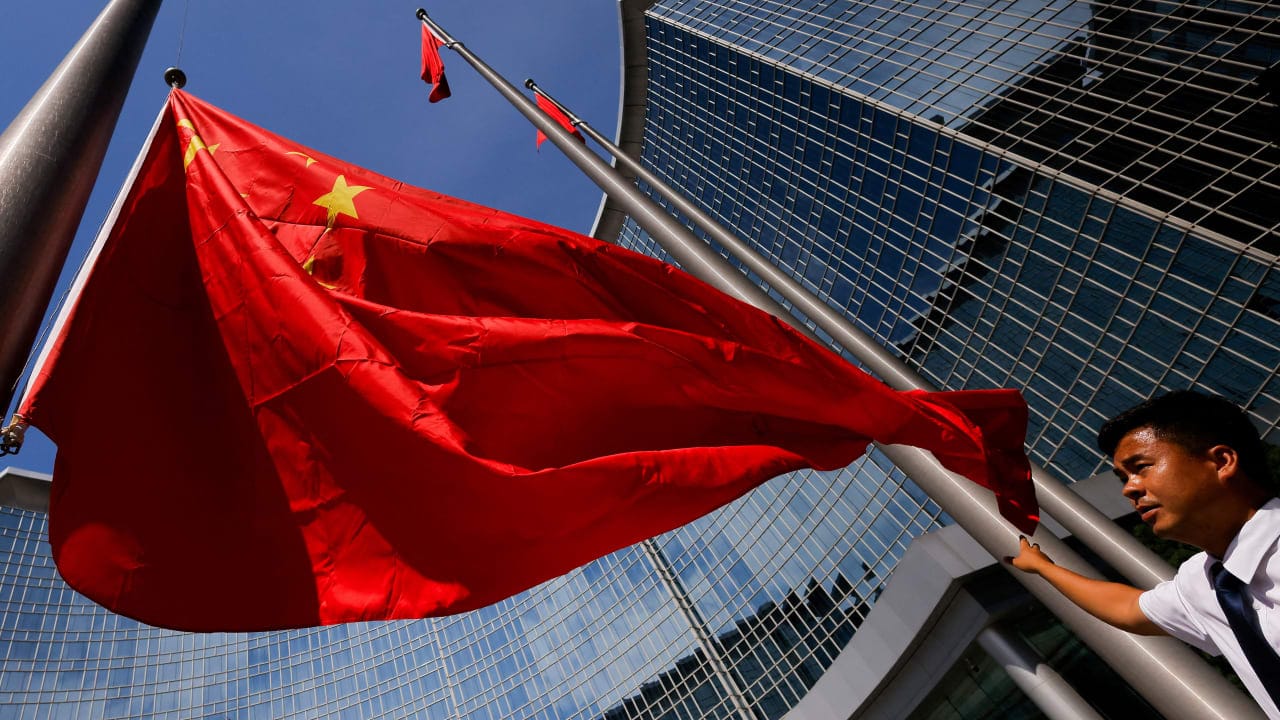
At a time when the Western world, and the US in particular, are striving to break away from ties with China in the field of strategic infrastructure, Chinese companies continue to participate in the construction of huge projects critical to the Israeli economy.
Dalia Energy recently signed planning, procurement and construction agreements with three Chinese companies, CHEC, HEI and THCC, for the construction of two power plants. The agreements include the construction of the Dalia 2 power plant at the Tzafit site, with a NIS 3.8 billion budget, and the Eshkol Avshel power plant at the Eshkol power plant site, with a NIS 3.3 billion budget.
On government tenders, a process is underway in which investments by Chinese companies are examined by the Foreign Investment Review Committee, which has blocked several investments by Chinese companies in Israel in recent years. However, they have found a back door to enter investments in critical facilities by signing agreements with private companies, such as Dalia.
China Harbor, part of the consortium that won the construction of the two Dalia power plants was previously disqualified from the tender to build a refinery port in Haifa. After Israel Ports Co. took this step “for national security reasons,” the Chinese appealed to the courts. Last year, a judge in the Tel Aviv District Court explained that he intended to rule against China Harbor and dismiss the petition that was presented to him. The Chinese company subsequently withdrew the petition to avoid a ruling.
Dalia’s ventures are not the first for China Harbor in the energy sector. Complaints were also raised about the company’s involvement in the construction work of the Kesem power plant, but at that time the National Security Council found no problems with the project. “The foreign company is not establishing or operating the plant but rather performing contract work for the builder (work estimated to be very small in scope compared with the project),” the National Public Works Department wrote in response to a request from the Rosh Ha’Ayin Municipality.
China Harbor, part of the consortium that won the construction of the two Dalia power plants was previously disqualified from the tender to build a refinery port in Haifa. After Israel Ports Co. took this step “for national security reasons,” the Chinese appealed to the courts. Last year, a judge in the Tel Aviv District Court explained that he intended to rule against China Harbor and dismiss the petition that was presented to him. The Chinese company subsequently withdrew the petition to avoid a ruling.
Dalia’s ventures are not the first for China Harbor in the energy sector. Complaints were also raised about the company’s involvement in the construction work of the Kesem power plant, but at that time the National Security Council found no problems with the project. “The foreign company is not establishing or operating the plant but rather performing contract work for the builder (work estimated to be very small in scope compared with the project),” the National Public Works Department wrote in response to a request from the Rosh Ha’Ayin Municipality.