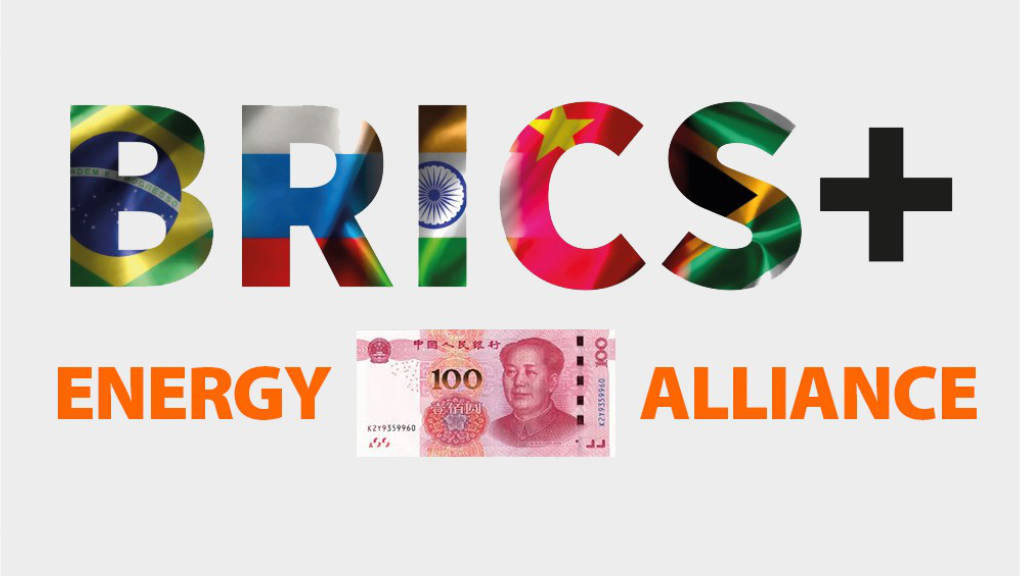
The BRICS energy alliance has launched a coordinated system of Petro-Yuan (Chinese RMB Yuan currency) oil contracts that directly challenges US dollar dominance in global energy markets. The BRICS controls 46 million barrels per day of oil production and is implementing BRICS plus currency shift mechanisms through Yuan-denominated contracts, Indian Rupee – Russian Ruble swaps, and local currency financing. The BRICS full members now also include Brazil, Egypt, Ethiopia, Indonesia, Iran, South Africa, and the UAE.
This de-dollarization impact represents the most significant threat to American financial hegemony since Bretton Woods, as global energy market changes can now bypass the traditional Western-controlled payment systems.
The BRICS energy group now controls substantial energy reserves, with Saudi Arabia (nor a BRICS member but participating in the energy alliance) and Russia pumping a quarter of the world’s oil. The Shanghai Stock Exchange rose 60% in its Yuan-denominated crude oil over the past year, and through the Petro-Yuan oil contracts, participants make transactions outside US dollar-based sources.
Gas reserves show even stronger concentration, as Russia, Iran, Qatar, Algeria, and UAE hold two-thirds of global reserves. Algeria is a BRICS partner nation and has joined the BRICS New Development Bank, while Qatar has expressed interest.
New infrastructure projects like the Russia-China Power of Siberia 2 pipeline will come online by the end of 2025, enabling further BRICS plus currency shift initiatives.
The de-dollarization impact becomes visible through coordinated currency arrangements bypassing SWIFT systems. Russia-India energy transactions now use Ruble-Rupee swaps, while China-Saudi arrangements process billions through Yuan-Riyal exchanges. Riyadh has also given strong hints that US dollar-denominated oil contracts are being reviewed and may be discounted for non-US deals. Yuan-denominated oil deals accounted for 20% of daily Brent crude volumes last year, testing 24% by early 2025. These global energy market changes create parallel financial infrastructure independent of Western oversight.
Source: Russiaspivottoasia