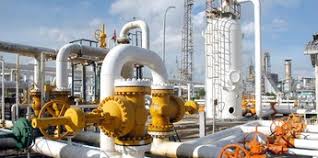
Tanzania is edging closer to launching one of its most transformative industrial projects, the development of a gas-to-liquid (GTL) plant that will locally produce diesel, jet fuel, naptha, hydrogen, and fertilizer posing as a major challenger to Dangote’s empire.
The project advanced to a major milestone after Rocky Mountain GTL, a Canadian clean-fuel technology company, completed a feasibility study confirming the project’s economic and technical viability.
The planned $420 million investment could position Tanzania as Africa’s first exporter of synthetic jet fuel and diesel, capitalising on its 57.54 trillion cubic feet of natural gas. Representatives of Rocky Mountain GTL, after meetings with Tanzanian government officials earlier this year, said detailed commercial collaboration is already underway.
“They have agreed to share detailed information regarding the market and gas resources now and in the future, as well as conduct a feasibility study that will lead to the construction of the plant,” Rithi Tanzania Group executives Martin Kaswahili, Jack Pemba, and Hassan Nganzo told The Citizen.
“Once the project is up and running, Rocky Mountain GTL’s technology will supply Tanzania with diesel and jet fuel and will also be able to produce naphtha,” they added.
According to the firm, the upgraded energy supply chain will also cut costs for local airlines. “It will give airlines quick access to jet fuel and be more cost effective, making Tanzanian airlines more competitive,” the company said.
It added that hydrogen exports to Europe and Asia could unlock a new high-value market for Tanzania. “The hydrogen market has unlimited demand.”
The shift could reshape jet-fuel trade in Africa, where Dangote’s rapidly expanding refinery and distribution network currently dominates supply.
The 650,000-barrel-per-day Dangote Refinery in Nigeria, the largest single-train refinery in the world has begun exporting aviation kerosene to African carriers and beyond, a move geared toward controlling pricing and logistics from West Africa and beyond.
Tanzania’s entry threatens that market power. By reducing dependence on refined imports including Nigerian-sourced jet fuel, the GTL plant provides East Africa with an alternative hub for supply and pricing.
The Tanzanian government has already sent a high-level due-diligence team to validate the technology and assess rollout readiness. The modular GTL design enables faster commissioning within two years, far quicker than conventional refineries requiring five to seven years.
Petroleum products accounted for $2.6 billion in import spending last year according to the Bank of Tanzania, intensifying pressure to secure domestic alternatives. Local financiers are now lobbying for priority participation to ensure Tanzanian businesses retain majority economic benefit.
Source: Africabusinessinsider